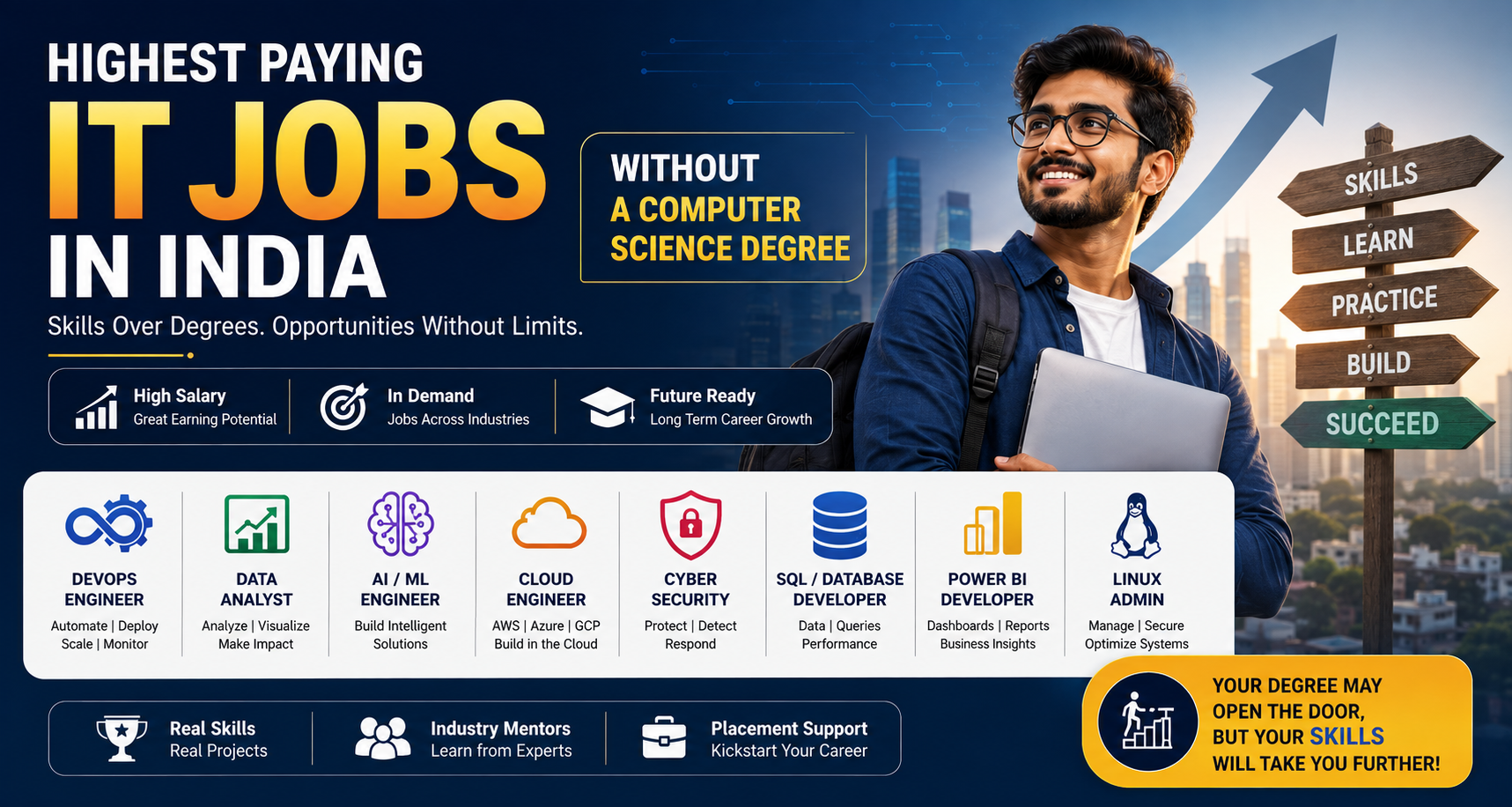
Highest Paying IT Jobs in India Without a Computer Science Degree | 2026 Career Guide
Do you think you need a Computer Science degree to build a successful career in IT? The good news is that this is no longer always the case.
The Indian IT industry has expanded far beyond traditional software development. Companies now hire professionals for DevOps, Cloud Computing, Data Analytics, Artificial Intelligence, Cyber Security, Business Intelligence, Database Administration, Linux Administration and many other technology roles.
For many of these careers, employers are more interested in your technical skills, practical knowledge, certifications, projects and problem-solving ability than simply the name of your degree.
This makes the IT industry an attractive option for graduates from B.Com, BBA, B.Sc, BA, BCA, MBA, Mechanical Engineering, Civil Engineering, Electronics, Electrical Engineering and other educational backgrounds.
In this guide, we will explore some of the highest-paying IT career options in India that do not necessarily require a Computer Science degree, along with the skills you need, career opportunities and a practical roadmap to get started.
Can You Get an IT Job Without a Computer Science Degree?
Yes. Many IT roles can be entered without having a traditional Computer Science degree.
However, not having a CS degree does not mean that technical knowledge is unnecessary. You still need to develop the skills required for the role you want to pursue.
For example, someone interested in DevOps should learn Linux, networking, Git, Docker, Kubernetes, cloud platforms and CI/CD. Similarly, someone interested in Data Analytics should learn Excel, SQL, Python, statistics and visualization tools such as Power BI or Tableau.
The important difference is that your skills and practical experience become even more important when your academic background is not directly related to technology.
What Employers Look For
When hiring candidates for technical positions, companies may evaluate several factors:
- Technical knowledge
- Practical project experience
- Problem-solving ability
- Communication skills
- Understanding of industry tools
- Certifications where relevant
- Internship or hands-on experience
- Ability to troubleshoot real-world problems
- Interview performance
- Continuous learning attitude
Highest Paying IT Jobs Without a Computer Science Degree
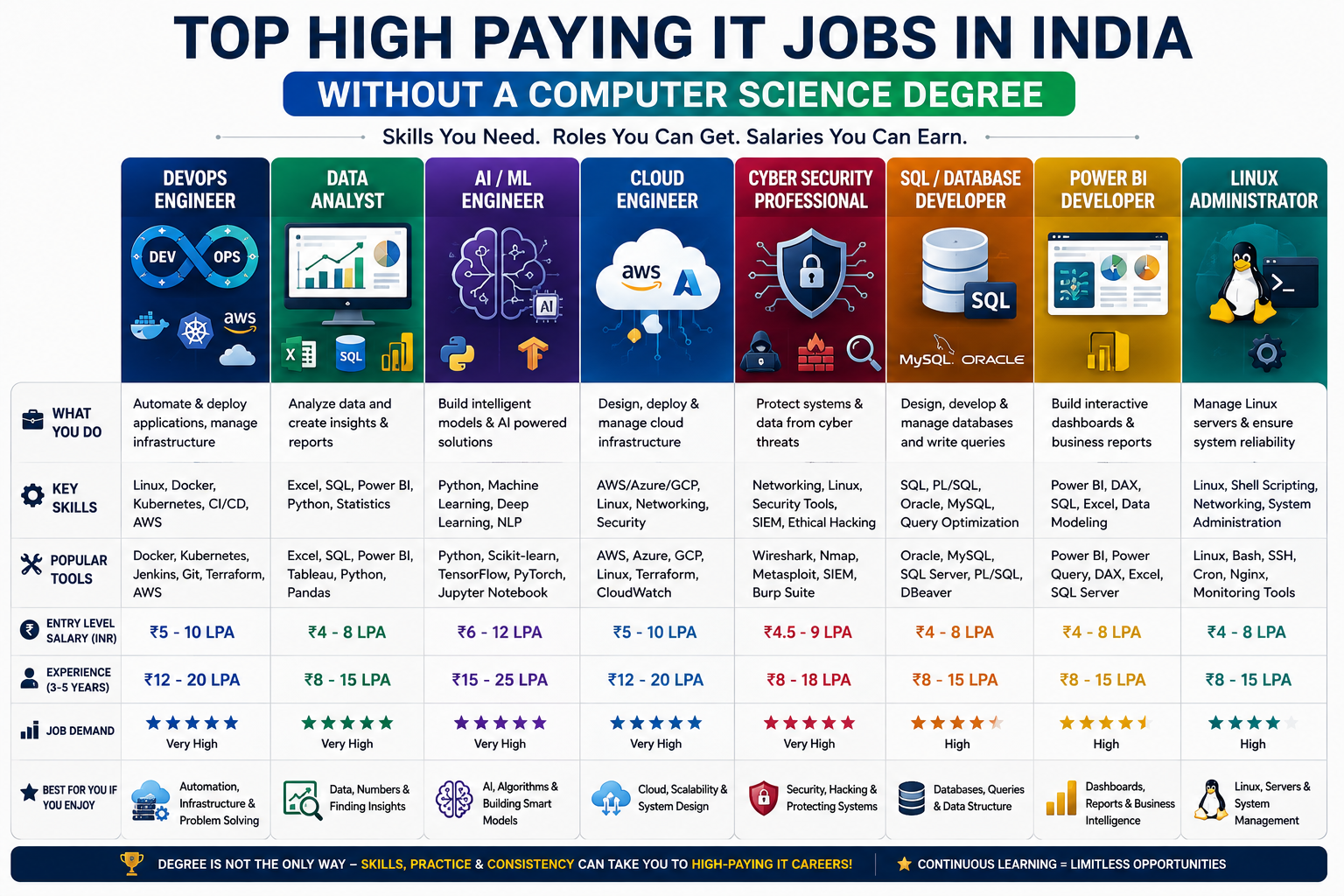
Here are some of the most attractive IT career paths for candidates who come from non-CS educational backgrounds.
| Career | Important Skills | Typical Entry-Level Potential |
|---|---|---|
| DevOps Engineer | Linux, Git, Docker, Kubernetes, AWS | ₹5–10 LPA |
| Data Analyst | Excel, SQL, Power BI, Python | ₹4–8 LPA |
| AI / ML Professional | Python, Statistics, ML, Generative AI | ₹6–12 LPA |
| Cloud Engineer | AWS, Azure, Networking, Linux | ₹5–10 LPA |
| Cyber Security Professional | Networking, Linux, Security, SIEM | ₹4.5–9 LPA |
| Database / SQL Developer | SQL, Oracle, MySQL, PL/SQL | ₹4–8 LPA |
| Power BI Developer | Power BI, DAX, SQL, Excel | ₹4–8 LPA |
| Linux Administrator | Linux, Shell Scripting, Networking | ₹4–8 LPA |
Salary ranges are indicative and can vary significantly based on location, company, skills, experience, projects and market conditions.
1. DevOps Engineer
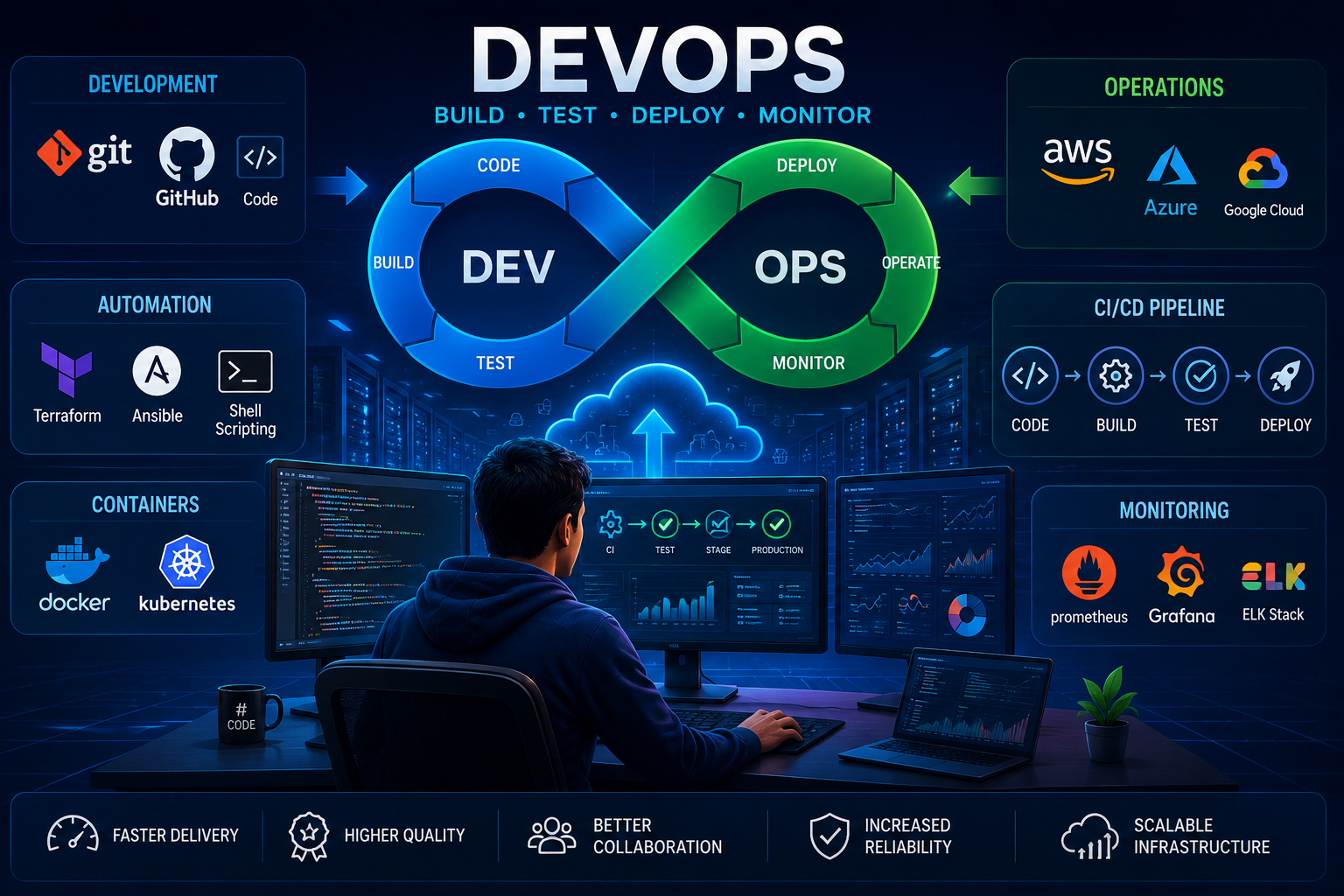
DevOps is one of the strongest technology career options for professionals who enjoy Linux, automation, infrastructure and cloud technologies.
DevOps engineers help organizations automate software delivery and infrastructure management. They work with development and operations teams to create reliable CI/CD pipelines and automate deployment processes.
Skills to Learn
- Linux Administration
- Shell Scripting
- Git and GitHub
- Docker
- Kubernetes
- Jenkins
- AWS or Azure
- Terraform
- Ansible
- Prometheus and Grafana
Who Should Choose DevOps?
DevOps can be a good choice if you enjoy servers, Linux, troubleshooting, automation, cloud platforms and infrastructure.
A non-CS graduate can build a strong DevOps profile by completing practical projects such as deploying applications using Docker, creating Jenkins CI/CD pipelines and deploying workloads on AWS.
2. Data Analyst
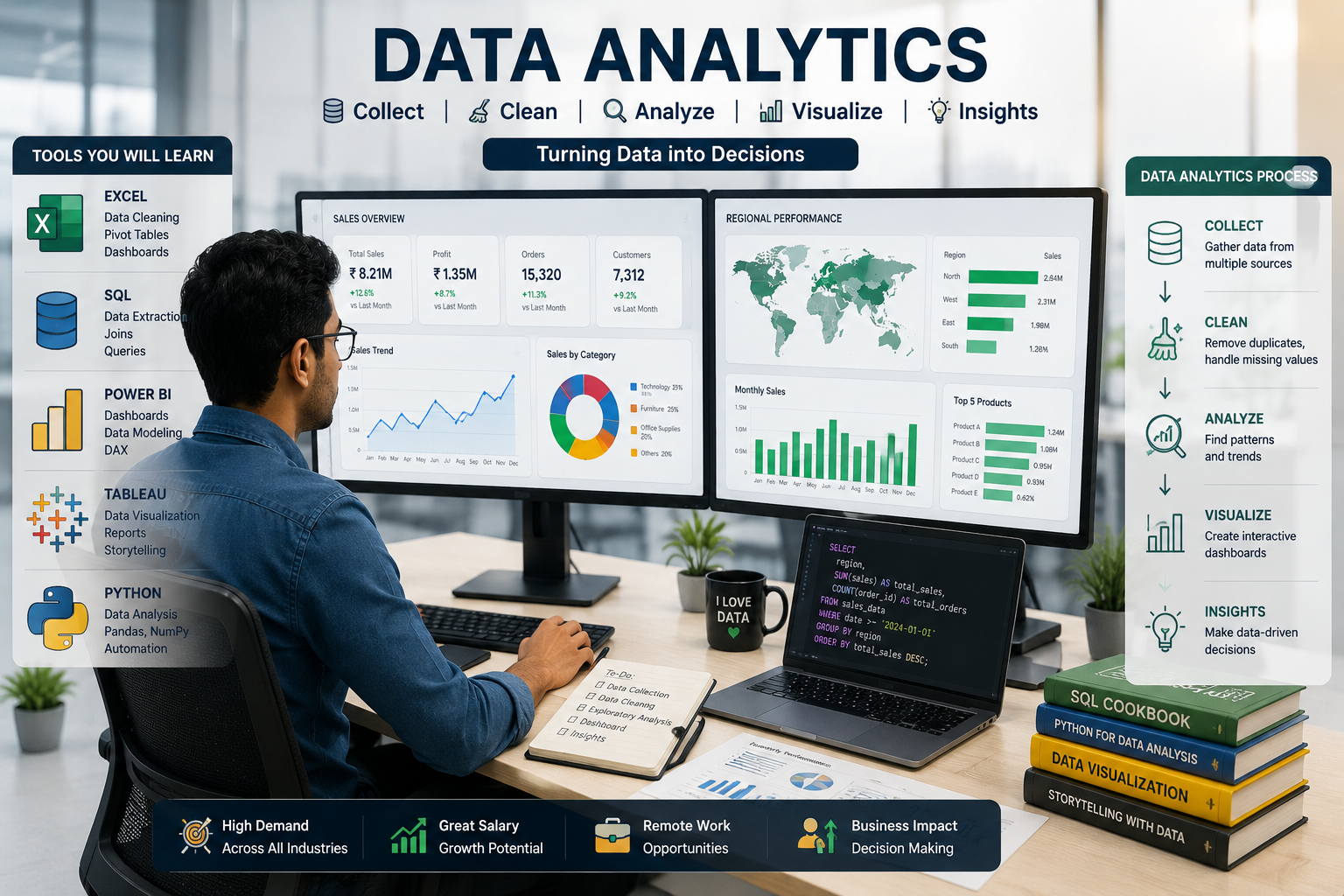
Data Analytics is one of the most accessible technology careers for graduates from different educational backgrounds.
Companies need professionals who can transform raw business data into useful reports and insights. Data Analysts work with sales, finance, marketing, operations, HR and other departments.
Skills to Learn
- Microsoft Excel
- SQL
- Power BI
- Tableau
- Python
- Pandas and NumPy
- Statistics
- Data Cleaning
- Data Visualization
Who Should Choose Data Analytics?
If you enjoy numbers, business problems, reports, dashboards and finding patterns in data, Data Analytics can be an excellent career path.
Commerce, finance, business and mathematics graduates can particularly benefit from combining their existing domain knowledge with modern analytics tools.
3. Artificial Intelligence and Generative AI
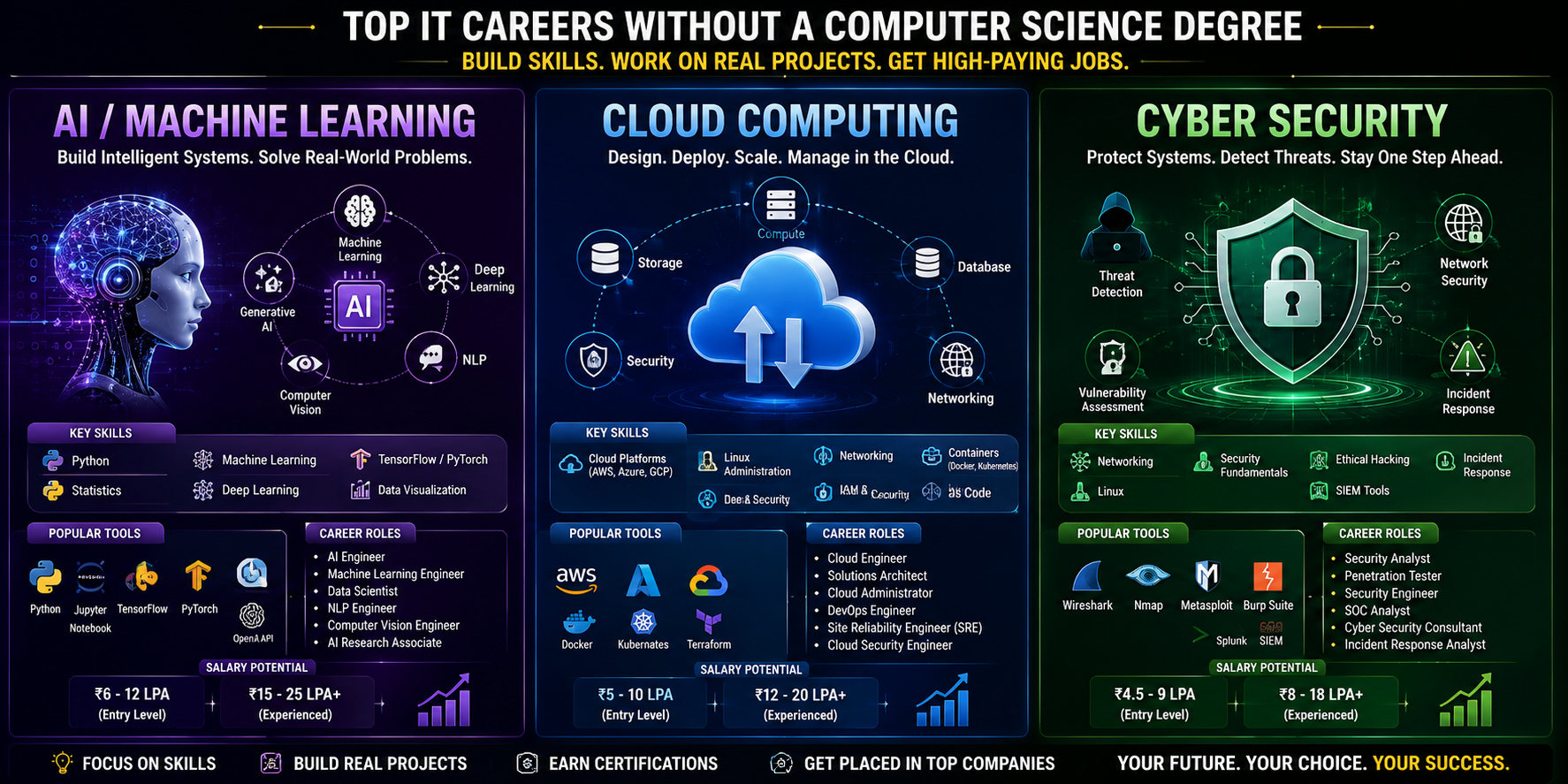
Artificial Intelligence has become one of the most rapidly evolving areas of technology.
AI professionals work on machine learning models, automation, natural language processing, computer vision and increasingly Generative AI applications.
Skills to Learn
- Python
- Statistics
- NumPy
- Pandas
- Machine Learning
- Scikit-Learn
- Deep Learning
- Natural Language Processing
- Generative AI
- Prompt Engineering
- AI APIs
AI generally requires stronger mathematics and programming knowledge than some entry-level IT paths. Therefore, candidates without a CS background should be prepared to invest significant time in Python, mathematics, statistics and machine learning fundamentals.
4. Cloud Engineer
Organizations across India are moving applications and infrastructure to cloud platforms. This has created demand for professionals who understand cloud architecture, networking, security and infrastructure.
Popular cloud platforms include AWS, Microsoft Azure and Google Cloud.
Skills to Learn
- AWS
- Microsoft Azure
- Google Cloud
- Linux
- Networking
- IAM
- Cloud Storage
- Virtual Machines
- Load Balancing
- Auto Scaling
- Cloud Security
Cloud Computing is especially powerful when combined with DevOps. A professional who understands both cloud infrastructure and automation can target a broader range of roles.
5. Cyber Security
Cyber Security professionals help organizations protect applications, networks, servers and data from security threats.
The field includes several specializations, including security operations, penetration testing, vulnerability management, cloud security and incident response.
Skills to Learn
- Networking Fundamentals
- Linux
- Firewalls
- Web Security
- OWASP
- Ethical Hacking
- SIEM
- Incident Response
- Vulnerability Assessment
- Security Monitoring
Cyber Security can be a good option for candidates who enjoy investigation, networking, troubleshooting and understanding how systems can be attacked and protected.
6. SQL and Database Developer
Almost every organization depends on databases. Banks, hospitals, e-commerce companies, educational institutions, manufacturing companies and software organizations all require professionals who understand data storage and database systems.
SQL is also one of the most valuable skills for Data Analysts, Data Engineers, Developers and many other technology professionals.
Skills to Learn
- SQL
- Joins
- Subqueries
- Functions
- Indexes
- Views
- Stored Procedures
- PL/SQL
- Oracle
- MySQL
- Query Optimization
SQL is particularly useful for candidates from finance, commerce and business backgrounds because database skills can be combined with existing domain knowledge.
7. Power BI Developer / Business Intelligence Professional
Business Intelligence professionals help organizations understand their data through interactive dashboards and reports.
Power BI is widely used for business reporting, KPI tracking, financial analysis, sales analytics and operational reporting.
Skills to Learn
- Power BI
- Power Query
- DAX
- SQL
- Excel
- Data Modeling
- Dashboard Design
- Business Intelligence
Power BI can be particularly attractive for candidates who have a business, finance, accounting or management background because they can combine technical reporting skills with domain knowledge.
8. Linux System Administrator
Linux remains a fundamental technology behind cloud platforms, servers, DevOps environments and many enterprise applications.
Linux Administration can therefore provide a strong foundation for careers in DevOps, Cloud Computing and Site Reliability Engineering.
Skills to Learn
- Linux Commands
- File Management
- Users and Groups
- Permissions
- Shell Scripting
- Process Management
- Networking
- System Monitoring
- Crontab
- Log Management
For candidates starting from a non-CS background, Linux can be an excellent entry point into infrastructure and cloud careers.
Which IT Career Is Best for You?
The highest-paying career is not necessarily the best career for everyone. Your choice should depend on your interests, current skills and willingness to learn.
| If You Enjoy | Consider |
|---|---|
| Servers, automation and infrastructure | DevOps / Cloud |
| Numbers, reports and business | Data Analytics / Power BI |
| Programming and mathematics | AI / Machine Learning |
| Security and investigation | Cyber Security |
| Databases and structured data | SQL / Database Development |
| Linux and system administration | Linux / Cloud / DevOps |
How to Start an IT Career Without a CS Degree
If your educational background is not Computer Science, follow a structured approach instead of trying to learn everything at once.
Step 1: Choose One Career Path
Do not simultaneously start learning DevOps, AI, Cyber Security, Data Analytics and Cloud Computing. Choose one primary career path based on your interests.
Step 2: Learn the Fundamentals
Build a strong foundation before jumping into advanced tools. For example, learn Linux and networking before trying to master Kubernetes.
Step 3: Learn Industry Tools
Once the fundamentals are clear, learn the tools commonly used by professionals in your selected field.
Step 4: Build Real Projects
Projects can demonstrate that you can apply your knowledge to real-world problems.
For example:
- Build a Power BI sales dashboard.
- Create SQL projects using real-world datasets.
- Deploy an application using Docker.
- Create a CI/CD pipeline using Jenkins.
- Deploy an application on AWS.
- Build a Python data analysis project.
- Create an AI application using an API.
Step 5: Create a Strong Resume
Your resume should clearly highlight your technical skills, projects, certifications and measurable achievements.
Step 6: Prepare for Interviews
Technical knowledge alone is not enough. Practice technical questions, scenario-based questions, troubleshooting problems and HR interviews.
Does Your Degree Still Matter?
Your degree can still matter because some companies and job descriptions have formal educational requirements. However, it is not the only factor that determines your career success.
A candidate with a non-CS degree and strong technical skills, projects and communication ability can sometimes be more competitive than a candidate with a CS degree but weak practical knowledge.
The best approach is therefore to combine your existing education with industry-relevant technical skills.
Career Roadmap for Non-CS Graduates
A simple roadmap can look like this:
- Identify your preferred IT career.
- Learn the fundamentals.
- Learn the required industry tools.
- Complete practical projects.
- Build a GitHub or project portfolio where applicable.
- Earn relevant certifications if they add value.
- Prepare a technical resume.
- Practice interviews.
- Apply for internships and entry-level positions.
- Continue learning while gaining professional experience.
Final Thoughts
You do not necessarily need a Computer Science degree to build a successful IT career in India.
What you do need is a clear career goal, practical technical skills, consistent learning and the ability to demonstrate what you can actually do.
Whether you choose DevOps, Data Analytics, Artificial Intelligence, Cloud Computing, Cyber Security, SQL, Power BI or Linux, focus on becoming genuinely skilled in one area instead of collecting certificates without practical knowledge.
Your educational background is only one part of your career story. Your skills, projects, experience and ability to solve real-world problems can make a significant difference.
🚀 Start Your IT Career with BIRD

At BIRD, you can build practical technology skills through career-focused training designed around real-world tools and projects.
Explore programs in:
- TechOps
- DevOps
- PL/SQL
- Data Analytics
- Artificial Intelligence
- Linux Administration
- Python
- SQL
- Cloud Computing
- Power BI
Ready to start your IT career? Explore BIRD courses, build practical skills and prepare yourself for today's technology job market.
📞 Contact BIRD: 9711412286
💬 WhatsApp: 9711412286